


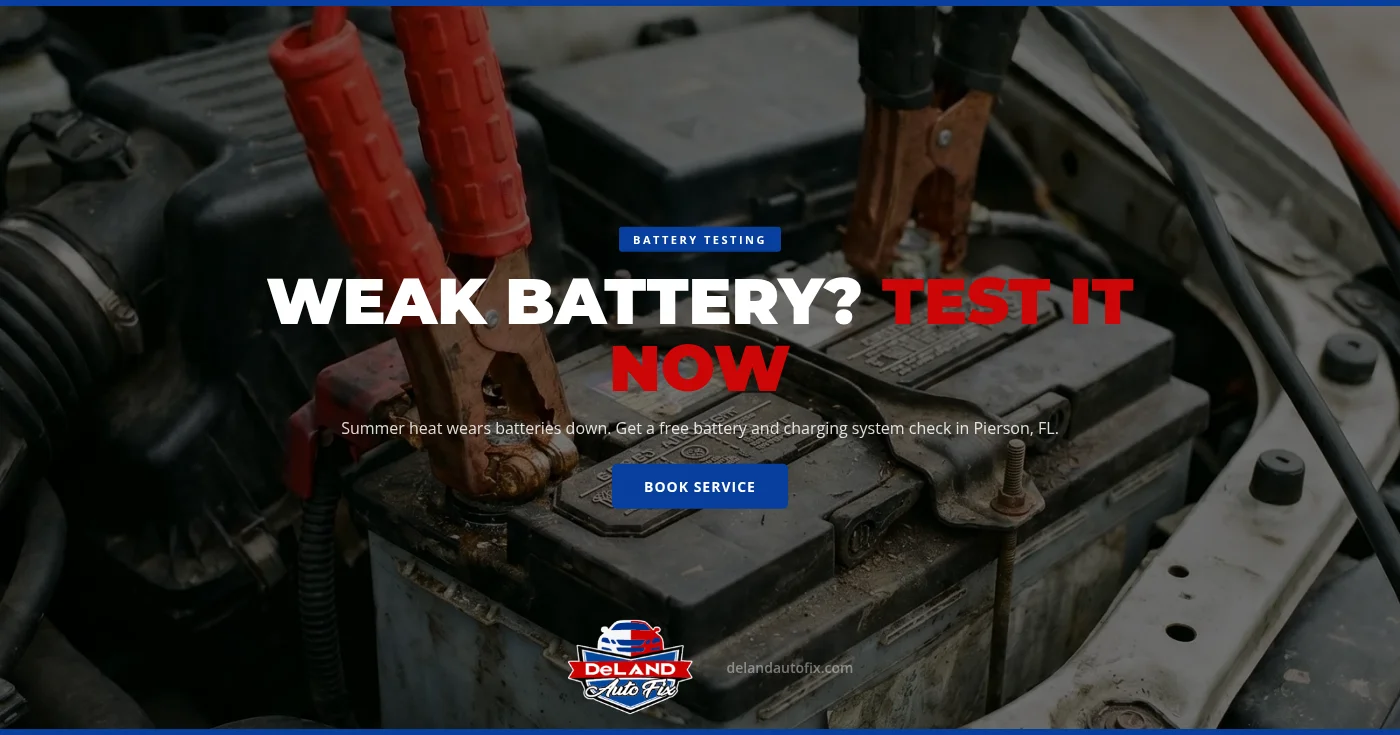
The first genuinely cool morning of fall has a way of exposing problems that hid all summer. You turn the key, the engine groans through a slow, tired crank, or you hear nothing but a click. For drivers in Pierson, that moment often reveals a battery that seemed fine in August but was quietly fading the whole time. That’s why car battery testing in Pierson, FL belongs on your to-do list before the cold snaps and holiday road trips arrive.
Florida’s long hot season is hard on batteries. Heat speeds up the chemical wear inside, and the damage rarely shows until cooler temperatures ask the battery to work harder. Add Thanksgiving travel and long rural drives, and a weak battery becomes more than an inconvenience.
Here at Deland Auto, we see this pattern every year. Below, we explain how summer heat wears batteries down, which warning signs to watch for, how a full charging system test separates battery, alternator and starter problems, and what to expect when you bring your vehicle in.
How Florida Summer Heat Quietly Wears Down Your Car Battery
Most people assume cold weather kills batteries. In reality, heat does much of the damage, and cold simply finishes the job. Inside a conventional lead-acid battery, high temperatures speed up evaporation of the electrolyte and accelerate the chemical reactions that break down the internal plates.
According to a SlashGear report on batteries in Florida, prolonged heat can cause the liquid inside a battery to evaporate and crystallize, damaging contacts and warping plates. The same report notes that heat can trigger premature sulfation and that Florida summers may cut a year or more off a battery’s expected life. Exact figures vary by battery type, vehicle and driving habits, but the direction is clear: our heat shortens battery life.
Under the hood, conditions are even tougher. Engine bays run far hotter than the outside air, and in our climate the hot season can stretch from roughly May into October. That’s months of slow, invisible wear.
Some drivers switch to AGM (absorbed glass mat) batteries, which generally tolerate heat better than standard flooded batteries, and many newer vehicles with start-stop systems require them. Whether an AGM upgrade makes sense for your vehicle is something we’re happy to walk through during a test.
Why Weak Batteries Finally Fail on Pierson's First Cool November Mornings
If heat does the damage, why does the battery die in November instead of July? It comes down to two things happening at once.
First, cold slows the chemical reaction that produces electrical current, so a battery delivers less power on a chilly morning than on a warm afternoon. Second, a cold engine is harder to turn over. Oil is thicker, internal parts have more resistance, and the starter needs more current to spin the engine fast enough to fire.
A healthy battery has plenty of reserve to handle both. A summer-weakened battery doesn’t. All season long, warm temperatures helped it squeak by, giving no hint that its capacity had shrunk. Then the first crisp morning arrives, demand goes up while supply goes down, and the battery that started your truck yesterday can’t do it today.
Inland areas of northwest Volusia County often feel those cool mornings sooner than the coast. The National Weather Service office in Melbourne covers our area and is worth checking when a cold front is on the way. When you see the first chilly forecast, treat it as a reminder to get your battery checked before it decides for you.
Warning Signs: Slow Cranking, Dim Lights, Dashboard Warnings and Corrosion
Batteries and charging systems usually give some warning before they fail completely. Here’s what to watch for.
Slow or Labored Cranking
A slow crank on a cool morning is the classic sign. If the engine sounds sluggish, takes longer than usual to catch or needs a second try, the battery may be losing capacity or a cable connection may be weak.
Dim Lights and Electrical Glitches
Headlights that dim at idle, flickering interior lights, slow power windows or a radio that resets itself can all point to low voltage. These symptoms can come from the battery or from an alternator that isn’t keeping up.
Dashboard Warning Lights
A battery-shaped light usually signals a charging system problem rather than the battery itself. Some vehicles also display messages such as “low battery” or “charging system fault.” Don’t ignore them; a car running on battery power alone may only go a short distance before it stalls.
Corrosion and Physical Changes
White, green or bluish crust on the terminals can interrupt the flow of current. A swollen case, a rotten-egg smell or visible leaks are more serious signs of overheating or overcharging. Battery acid can irritate skin and eyes, so let a professional handle the cleanup.
Battery, Alternator or Starter? How a Full Charging System Test Finds the Real Problem
A no-start doesn’t automatically mean you need a new battery. The battery, alternator and starter work as a team, and a failure in one often looks like a failure in another.
The Battery
The battery supplies the burst of power to start the engine and runs electronics when the engine is off. If your car starts after a jump and keeps running, but won’t start again after sitting, the battery is a likely suspect.
The Alternator
Once the engine runs, the alternator takes over, powering the electrical system and recharging the battery. If a jump gets you going but the car dies while driving, or the lights dim as you go, alternator testing is in order. A weak alternator can also slowly kill a brand-new battery, which is why replacing the battery alone sometimes doesn’t fix the problem.
The Starter
The starter motor physically turns the engine over. A single loud click, a grinding noise, or a fully charged battery that still won’t crank the engine can point to the starter or its wiring. When needed, we handle starter and alternator repair right in our shop.
A complete charging system test checks all three, plus the cables and grounds that connect them. That way you pay to fix the actual cause, not just the most obvious part.
What Happens During a Professional Battery Load Test and Electrical Diagnostic
A quick voltage reading tells only part of the story. A healthy, fully charged battery typically rests at around 12.6 volts with the engine off, but a weak battery can show a decent resting voltage and still collapse under real demand. That’s why we go further.
During a battery load test, we draw a heavy current from the battery, similar to what starting the engine requires, and watch how well it holds its voltage. Modern testers also estimate how much cold cranking capacity remains compared with the battery’s rating.
Next comes the charging system test. With the engine running, we check alternator output, which on many vehicles falls roughly between 13.5 and 14.7 volts, though specifications vary. We also measure the starter’s current draw and look for parasitic drains, such as a module or accessory that keeps pulling power after you shut the car off.
Our auto electrical diagnostics also cover terminals, cables, ground connections and stored trouble codes. Many newer vehicles, including BMW and other European models, often need a new battery registered to the car’s computer after a car battery replacement so the charging system manages it correctly. With a BMW Certified Technician Specialist as our owner, we’re equipped for that, whether you drive a BMW, a work truck or a hybrid with its own 12-volt system.
Rural Driving Around Pierson: Why a Battery Check Matters Before Holiday Travel
Life around Pierson involves real miles. Whether you’re commuting down US-17, hauling for work or heading out of town for Thanksgiving, you may be a long way from help if something goes wrong. A dead battery in your driveway is annoying; a dead battery at a dark gas station after the holiday meal is a much bigger problem.
Work trucks and farm vehicles add their own challenges. Lighting, radios and equipment chargers put extra load on the electrical system, and vehicles that sit for days between uses can slowly drain. Diesel engines typically demand more starting power too, so a tired battery shows up quickly when temperatures drop.
Holiday trips stack the odds as well: packed cargo, phone chargers and screens running, frequent restarts and cooler overnight temperatures. A battery and charging system check before you leave gives you peace of mind and a chance to fix small issues on your schedule instead of on the roadside.
It pairs well with a pre-trip look at fluids, belts and tires through our preventive and scheduled maintenance service. If your engine has been running rough, our engine maintenance team can check it during the same visit.
Frequently Asked Questions About Car Battery Testing in Pierson, FL
How long does a car battery last in Florida?
It varies, but Florida heat often shortens battery life compared with cooler climates. Many batteries here last somewhere around three to five years, and some fail sooner. Once yours is about three years old, we recommend testing it at least once a year, ideally in the fall.
Why did my battery die on the first cold morning when it was fine all summer?
Summer heat likely weakened it gradually, and warm temperatures masked the loss. Cool mornings reduce battery output and increase the power needed to crank the engine, so the hidden weakness finally shows.
Can a bad alternator ruin a new battery?
Yes. An alternator that undercharges leaves the battery chronically low, and one that overcharges can overheat it. That’s why we test the whole charging system, not just the battery.
Should I get my battery tested before a Thanksgiving trip from Pierson?
We think it’s one of the smartest things you can do before a long drive. A test takes little time and can catch a weak battery or failing alternator before it strands you far from home. Our free 15-minute diagnostic comes with no obligation.
Schedule Car Battery Testing in Pierson, FL Before the Cold Mornings Arrive
Summer heat may have already done its damage, but the first cool morning doesn’t have to be the one that strands you. If you’re due for car battery testing in Pierson, FL, a quick check now can catch a tired battery, weak alternator or failing starter before it becomes a roadside problem.
Here at Deland Auto, we’ve been fixing vehicles for West Volusia drivers since 2022, from DeLand and Orange City to Deltona, DeBary, Lake Helen and the rural communities up US-17. We’re family-owned, led by a BMW Certified Technician Specialist, and our repairs are backed by a 3-year/36,000-mile TechNet warranty. Need a ride while we work? Our free valet service can get you home or to work. Se habla español.
Contact Deland Auto today to schedule your free 15-minute diagnostic and head into the holidays with confidence.
Where Can I Get My Battery and Charging System Tested by Someone I Can Trust?
We’re a family-owned shop that lives by one simple promise: We Fix Everything. When your car cranks slow, flickers or won’t start at all, we find the real cause instead of guessing, and we explain exactly what we found before any work begins.
Here’s what you get when you bring your vehicle to us for battery and charging system testing:
- A free 15-minute diagnostic with no obligation, so you know where you stand before spending a dime.
- A full battery load test plus alternator, starter, cable and ground checks.
- Expert care for all makes and models, including European vehicles, diesels and hybrids, from a shop owned by a BMW Certified Technician Specialist.
- A 3-year/36,000-mile TechNet warranty on our repairs for long-term peace of mind.
- Free valet service to get you home or to work while we handle the job.
- A free second opinion with no commitment if another shop has already quoted you.
- Se habla español — our team is happy to help in English or Spanish.
We think of ourselves as the dealership alternative for West Volusia: certified expertise, reliable turnaround and the personal attention of a local shop. Whether you need a quick battery check before a holiday trip or full auto diagnostics for a stubborn electrical problem, we’re ready to help.
Reach out to our team to book your test, and drive into the cooler months knowing your vehicle will start when you need it.